Black and White Interior Design: A Timeless Guide
Few colour combinations have stayed in favour as long as black and white interior design. It suits a period cottage and a new-build flat alike. The reason for its staying power is simple: contrast gives a room structure, while the absence of competing colours lets shape, light and texture take centre stage.
Yet a black and white interior can easily tip into feeling stark, cold or unfinished if it is treated as nothing more than white walls and a few black accessories. The most successful schemes are carefully balanced. They layer shades between the two extremes, mix patterns with plain surfaces, and add natural materials so the result feels warm and lived in. This guide explains how to achieve that balance in any room of the home.
Why Black and White Interior Design Works So Well
Black defines, white refreshes. White walls and larger pieces make a space feel bright and open, while black outlines the important shapes: a window frame, a table edge, a pendant light or the legs of a chair. Together they create a clear visual rhythm that other colours do not need to rescue.
The scheme is also practical: black and white furniture, tiles and textiles are widely available and easy to match across shops and budgets. If you later want a change, one new colour can be introduced through cushions or art without redecorating.
Finding the Right Balance
The most common question is how much black to use. There is no fixed formula, but the balance should follow the light and size of the room.
Let White Lead in Small or Dark Rooms
In a compact or north-facing space, use white and pale shades for the largest surfaces: walls, ceiling, bedding or main upholstery. Bring black in through smaller accents such as frames, lamp bases, handles or a patterned rug, keeping the room bright but defined.
Allow Black More Presence in Larger, Brighter Rooms
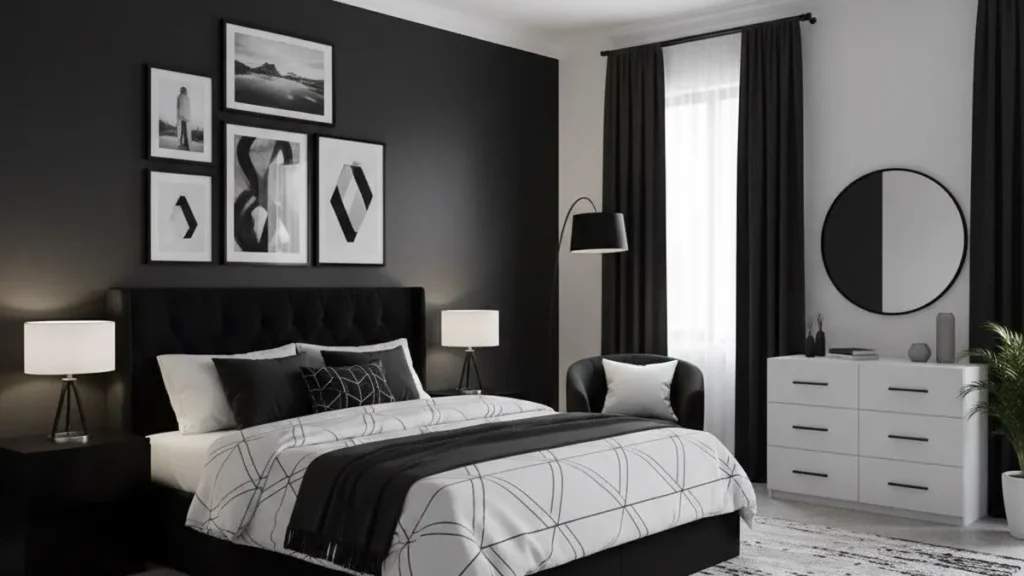
A generous, light-filled room can carry stronger statements. A black painted wall behind a bed, charcoal kitchen cabinets, or a black bookcase can look striking rather than heavy when daylight balances it. Even here, leave breathing space. If the wall is dark, keep the bedding, rug or sofa lighter so the contrast remains crisp.
Soften the Gap With Grey and Natural Tones
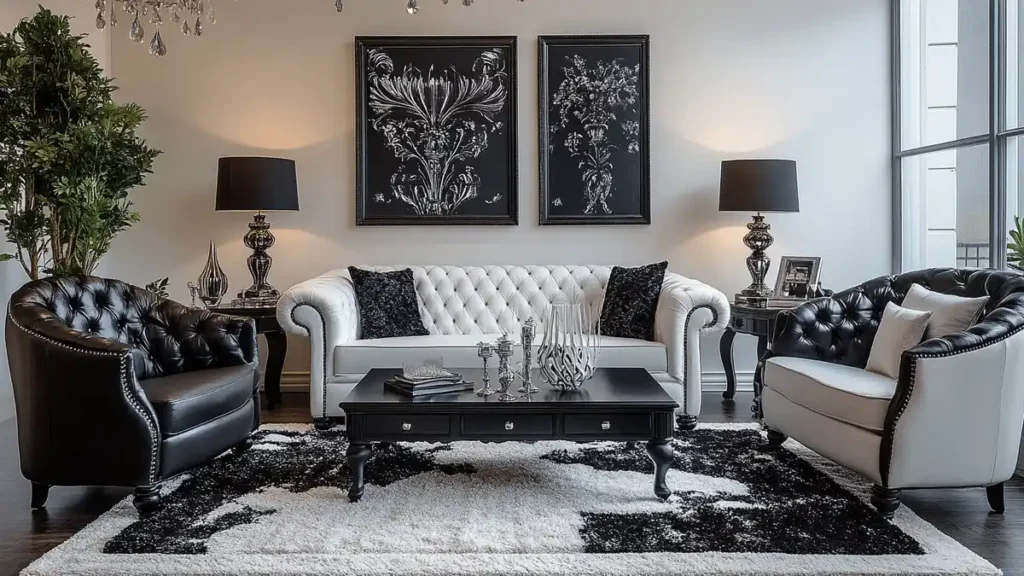
Pure black beside brilliant white is the sharpest possible contrast, and it is not right for every home. Shades in between do important work. Charcoal, slate, stone grey and warm off-white soften transitions and make the scheme feel layered. Natural wood, in particular, sits comfortably between the two poles and prevents a room from feeling like a photograph with no colour at all.
Build Interest With Pattern and Texture
When colour is limited, pattern and texture provide the variety a room needs. Without them, even a well-balanced scheme can look flat.
Mix Patterns at Different Scales
Combine one large-scale pattern, one medium and one small: a wide-striped rug, geometric cushions and a fine checked throw, for example. Keep patterns in the same colour family and separate busy pieces with plain surfaces. Black and white floor tiles in a hallway or bathroom give instant character and are practical to clean.
Layer Textures You Can Feel
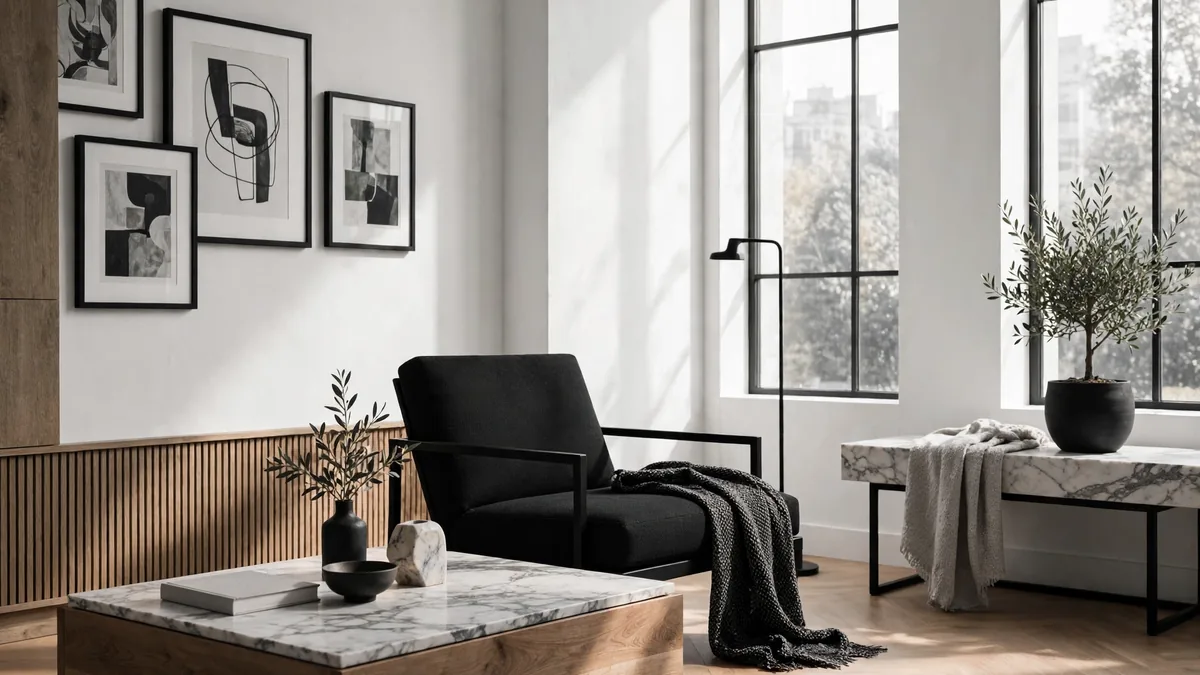
Pair matte with gloss, rough with smooth. Think of a linen sofa beside a lacquered black side table, a wool rug under a marble-topped coffee table, or matte black taps against glossy white tiles. Plants add a different kind of texture altogether; their organic shapes soften straight lines, and their green is the one colour that almost always improves a monochrome room.
Room-by-Room Ideas That Work
Living Room
Start with a light base: off-white walls and a pale or mid-grey sofa. Add a black coffee table or media unit to anchor the seating area, then layer a patterned rug and cushions in mixed prints. A black floor lamp and matching picture frames tie the scheme together. If the room feels chilly, introduce warm wood in a sideboard or shelving and choose warm, rather than cool, lighting.
Kitchen and Dining
White cabinets with black handles and taps give a clean, tailored look, while black cabinets with pale worktops feel more dramatic. In the dining area, black chairs around a wooden table are a forgiving, family-friendly choice, and a black pendant over the table adds focus.
Bedroom, Bathroom and Hallway
A bedroom needs the softer end of the scheme: warm white bedding, a charcoal throw, and black repeated in bedside lamps or frames, with just one patterned cushion or rug to keep the mood restful. Smaller spaces can handle bolder moves. Black and white floor tiles and black fittings create a crisp, classic bathroom, while in a hallway a black console table, a large mirror and a patterned runner make a narrow entrance feel organised and welcoming.
Choosing Finishes and Details Carefully
Small decisions decide whether a monochrome scheme feels polished. Repeat each finish at least twice: black handles with a black light fitting, for example. Be consistent with your white, too; a cool blue-white beside a warm creamy white can look like a mistake, so test paints together in the room’s own light.
Organise everyday items as part of the design. Matching storage boxes and a single tray for keys keep surfaces tidy, which matters more in a high-contrast scheme because clutter shows up clearly against it.
Common Mistakes to Avoid
Avoid using only pure black and stark white, with nothing in between, and do not forget warmth: cold lighting and shiny surfaces everywhere will make a room feel unwelcoming. Finally, do not scatter black accents randomly. Group and repeat them deliberately; scattered objects read as clutter, while considered placement reads as design.
Frequently Asked Questions
Will a black and white interior make my room look smaller?
Not necessarily. If white leads on walls and large furniture, the room will usually feel bright and open, with black used to define shapes. A large amount of black on walls can make a small, dark room feel enclosed, so test the balance against your natural light first.
How do I make a black and white room feel warm?
Layer texture and natural materials. Wood furniture, wool and linen textiles, warm lighting and a plant or two soften the contrast considerably. Choosing a warm off-white instead of a brilliant white also helps.
Can I add colour later to a black and white scheme?
Yes, and this is one of its strengths. Because the base is neutral, a single accent colour in cushions, art, a chair or a painted piece of furniture will sit comfortably. Change those items and the room takes on a new mood without redecoration.
Which patterns work best in a monochrome room?
Stripes, checks, geometrics and classic tile patterns all work well. Mix patterns at different scales, keep them within the same colour family, and balance them with plenty of plain surfaces so the room does not feel busy.
Conclusion
Black and white design endures because it is clear, flexible and forgiving. Let light decide your balance, soften contrast with grey and wood, and use pattern and texture for interest. Organised with care, a monochrome home need never feel cold.