Small Room Design Ideas to Make Every Inch Count
Small room design ideas show that a small room need not feel like a compromise. Some of the most comfortable homes are compact; they simply make clearer decisions about what belongs in them. When every piece has a purpose and the layout respects how you move, cook, work or rest, a modest footprint can feel generous rather than restricted.
The secret is not to squeeze in miniature versions of everything. Organise the room around your real routines, choose furniture at the right scale, and use colour, light and storage to remove visual clutter. Most ideas below can be tried before you spend anything at all.
Plan the Layout Around How You Live
Begin by watching how the room is actually used for a few days. Where do bags land? Where do you read, charge your phone or fold laundry? A layout built around those habits will feel larger than a prettier arrangement that fights them.
Measure First, Then Arrange
Measure the room, including door swings, radiators and skirting, and sketch a simple plan on paper. Mark the route from the door to the window or cupboard; keeping that path clear is the single easiest way to make a small space feel calm. Place the largest item first, usually the bed or sofa, against the longest wall, then fit smaller pieces around it.
Try moving furniture before replacing it. A bookcase turned to divide a studio into sleeping and living zones, or a desk moved under a window, can unlock space you did not know you had.
Choose a Single Focal Point
Decide on one focal point: a window, a fireplace, a piece of art or the bed. Arrange seating and storage to support it. When the eye has somewhere to rest, the room feels more ordered.
Pick Furniture at the Right Scale
Bulky furniture overwhelms a compact room, but furniture that is too small can look lost and prove uncomfortable. Aim for slim profiles that still do their job properly.
Look for Legs, Slim Arms and Open Bases
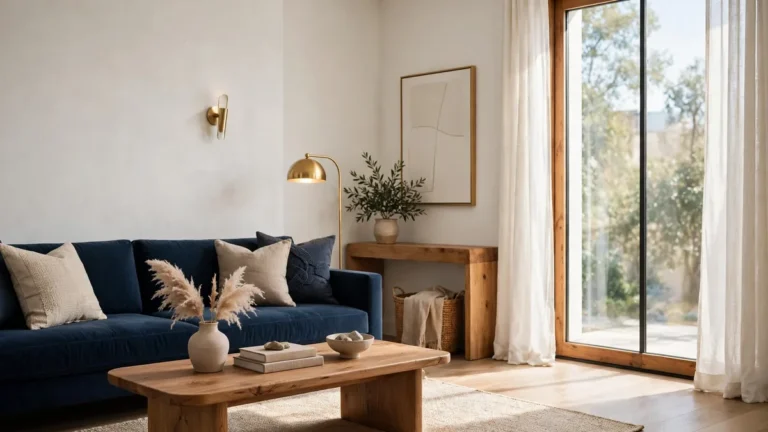
Sofas and chairs raised on legs let light flow beneath them, which makes the floor appear larger. Slim arms give you more seating width without increasing the overall footprint. Glass, acrylic or open-framed coffee tables occupy less visual space than solid blocks, and a round table softens tight corners where people pass.
Favour Pieces That Do Two Jobs
Dual-purpose furniture is the backbone of small-room design. Consider a storage ottoman that works as a seat, table and blanket box; a drop-leaf or extending dining table; a day bed that serves as a sofa; or a headboard with shelves. A folding desk or a wall-mounted drop-down table gives you a workspace that disappears when the working day ends.
Make Storage Invisible and Vertical
Clutter shrinks a room faster than its dimensions do. The answer is rarely more boxes on the floor; it is better use of walls and hidden spaces.
Use the Full Height of the Room
Fit shelves or cupboards up to the ceiling for items you need less often, keeping everyday things within easy reach. Tall, narrow storage draws the eye upward and emphasises height. Use the top of a wardrobe for labelled boxes in one colour, so the display looks tidy rather than improvised.
Add hooks behind doors, slim organisers inside cupboard doors, and under-bed drawers for bedding and out-of-season clothes.
Keep Surfaces Mostly Clear
Keep one surface, such as a coffee table, almost clear. Store remote controls, chargers and paperwork in a single basket or drawer. When everything has a home, tidying takes minutes.
Use Colour and Pattern With Confidence
A common myth says small rooms must be painted white. Light colours do help reflect daylight, but thoughtful use of deeper colour can make a compact space feel intentional and cosy.
Light, Dark and In-Between Options
Pale, warm tones on walls make a useful background if a room receives little natural light. Alternatively, painting a small room in one deeper colour, including woodwork, can blur its edges and make it feel like a deliberate snug rather than a box that failed to be large. This works particularly well in bedrooms, studies and cloakrooms.
Whichever direction you choose, keep the palette limited. Two or three main colours, repeated in textiles and accessories, create cohesion. Pattern is welcome in small doses: a striped rug to lengthen a room visually, or patterned cushions on a plain sofa.
Paint Tricks That Change Perception
Paint the ceiling lighter than the walls to suggest height, run the same flooring through adjoining spaces to remove visual breaks, and hang curtains high and wide so windows appear taller.
Maximise Light and Reflection
Light, more than floor area, decides whether a small room feels airy or gloomy.
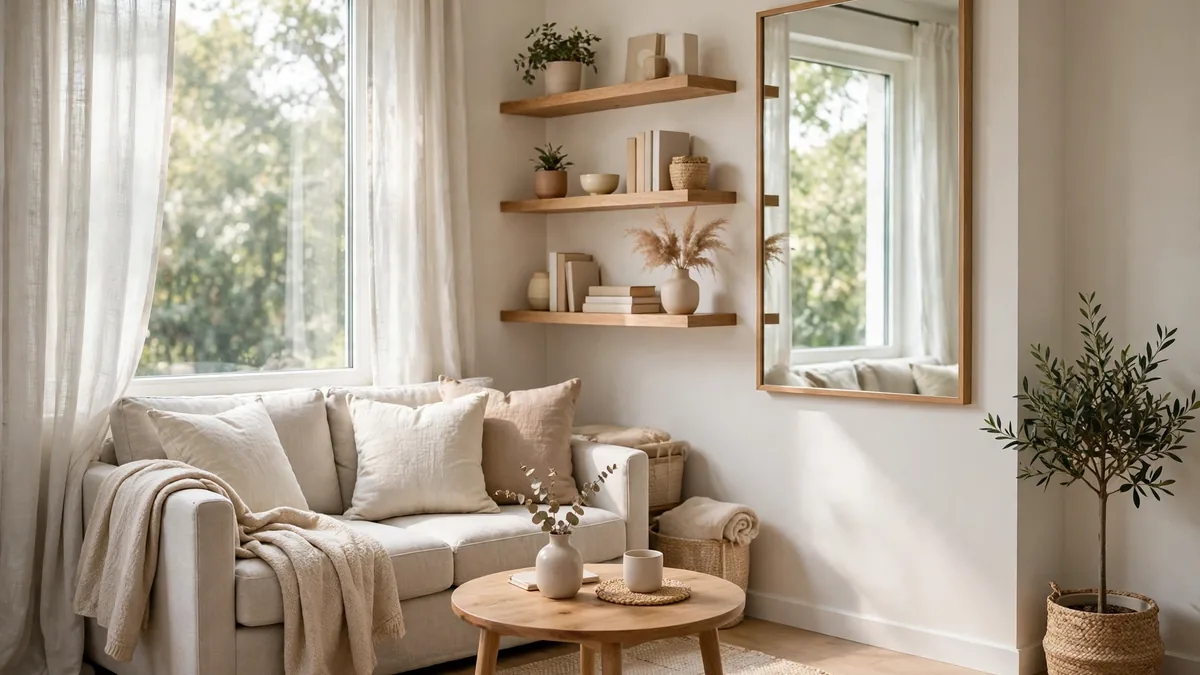
Layer your lighting just as you would in a larger home. Add a lamp for reading, task lighting where you work, and wall lights to free bedside surfaces. A large mirror opposite a window increases the sense of daylight; keep its placement purposeful, reflecting a tidy view rather than storage. Keep windowsills clear and choose blinds that stack neatly above the glass.
Adapt These Small Room Design Ideas Room by Room
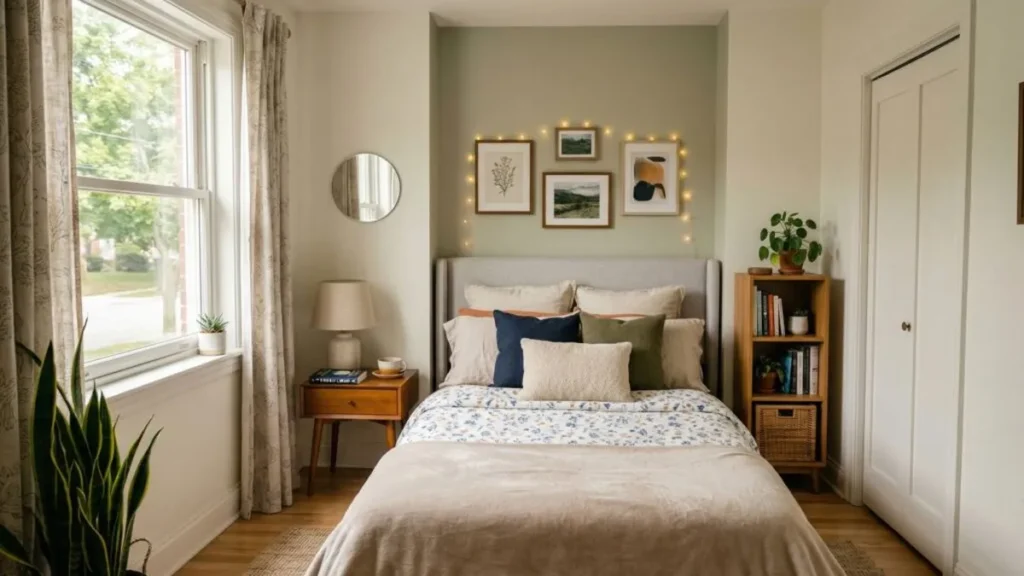
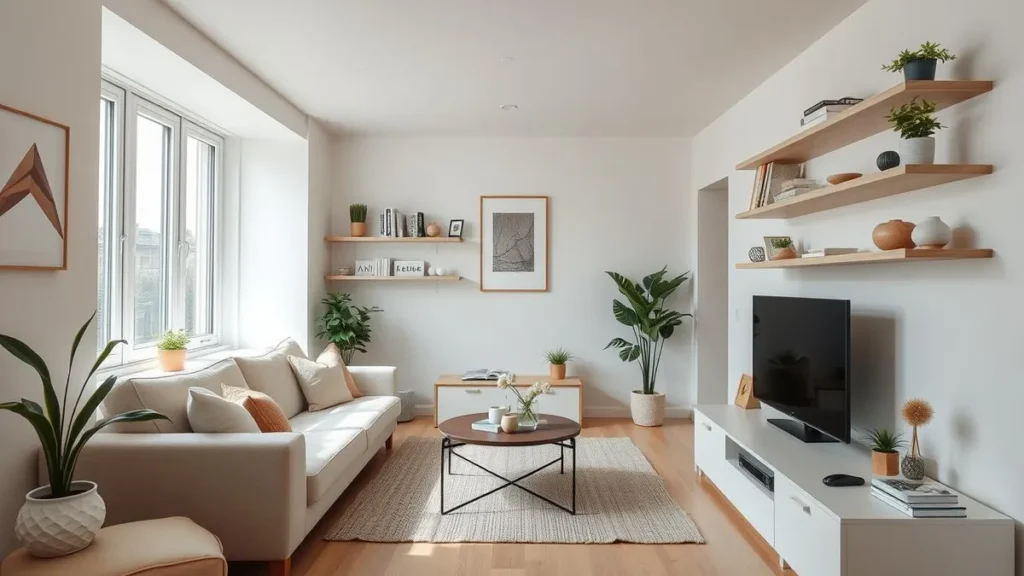
In a small living room, choose a rug large enough for the front legs of seating to sit on, replace a bulky media unit with a wall-mounted shelf, and use nesting tables for flexible surface space. In a small bedroom, use wall lights instead of table lamps and a bed frame with storage beneath; one well-organised wardrobe beats several small chests. For a small home office, pick a shallow desk, a chair that tucks fully beneath it, and vertical shelving, so work can be closed away at the end of the day.
Frequently Asked Questions
What colours make a small room look bigger?
Light, warm neutrals reflect daylight and usually make a room feel more open, especially with a lighter ceiling. However, a single deep colour used consistently can also work by blurring boundaries. The palette and light matter more than one magic shade.
How do I fit storage into a very small room?
Use vertical and hidden space: shelves to the ceiling, hooks behind doors, under-bed drawers and furniture that stores things inside it. Organise by how often you use an item, keeping daily essentials closest and seasonal items highest.
Should all my furniture be small in a small room?
No. A few correctly scaled pieces feel calmer than many tiny items. One comfortable sofa with slim arms, for example, is better than several small chairs that clutter the floor and seat nobody comfortably.
How can I make a small rented room feel personal without permanent changes?
Use removable hooks, leaning mirrors and art, layered textiles, plants and lamps. A rug, coordinated bedding and matching storage boxes change the mood quickly and can move with you to your next home.
Conclusion
Making every inch count is about clear priorities. Plan around your routines, keep walking routes open, choose furniture that earns its place, and organise storage upward and out of sight. With a calm palette and layered light, even the smallest room can feel purposeful and spacious.